✍️ You create, without always knowing it
You run an SME, you are a consultant, an employee or a freelancer. An IT consultant writes code, a graphic designer draws a logo, an architect draws plans, a writer signs articles, a director shapes a strategy. This guide is for the authors who do not know they are authors: those who create within the company, for the company, or for their clients.
👁️ At a glance
The conditions
Original work, written assignment contract, distinct remuneration. 2026: software developers are eligible again.
Read the detail — 9 conditions →Limits & ceilings
Movable-income regime up to 77.220 € (2026 income; base 37.500 €). Rights/remuneration ratio capped at 30 %. Beyond that: professional income.
Read the detail + simulator →The tax advantage
15 % withholding tax (movable income) up to 77.220 €, instead of the progressive rates up to 50 %.
Read the detail + the social side →Lump-sum expenses
Reserved for holders of an arts work certificate. Otherwise: actual expenses.
Read the detail →
✅ The conditions, in detail
The 2008 regime was tightened by the programme act of 26 December 2022. There are today nine cumulative conditions — only one pre-existed (the ceiling). The teaching fits in a checklist, but every link counts.
- Copyright or neighbouring rights covered by Book XI of the CEL.
- Relating to an original work (art. XI.165) or a performing artist's performance (art. XI.205).
- Assigned or licensed with a view to effective exploitation, according to the honest practices of the profession.
- By a holder who holds an arts work certificate (act of 16 December 2022)…
- … or, failing that, who transfers his rights to a third party (communication, performance, reproduction to the public) or receives them via a collective management organisation.
- The ratio of rights / total remuneration does not exceed 30 % (see B).
- The amount does not exceed the indexed ceiling (see B).
- The average of the last 4 years stays below the base ceiling (see B).
- All of this by written contract, with a distinct and identified remuneration of the rights.
The work and originality
The law does not define « the work ». A single substantive condition: originality. A work is protected if it is an « author's own intellectual creation » that reflects his personality through free and creative choices (CJEU Infopaq, Painer, Cofemel, Brompton). Neither artistic value, nor length, nor usefulness plays a role: a user manual, a product photo, a logo, a source code are protectable.
Originality is the imprint of the author's personality. A mathematics book, technical or medical plates are protectable, whatever the accuracy of the information, provided they reflect the personality of their author.After A. Berenboom, Le nouveau droit d'auteur
The written assignment — never implied
As against the author, every contract is proven in writing, and assignments are interpreted restrictively, in his favour (art. XI.167). Performing and delivering a commission does not entail assignment: the photographer who delivers and invoices his photos has not assigned the right to exploit them. The Court of Cassation has so held for the architect (Cass., 18 June 2020): no implied assignment, even for a paid commission.
The remuneration of the rights, distinct
The part that remunerates the assignment of the rights must be identified separately from the part that remunerates the service. It is this part that benefits from the 15 %.
« Communication to the public »: two planes never to be confused
On the civil plane (protection). Communication to the public has never been a condition. A work is protected without being disseminated — it is an economic prerogative of the author, not a condition of protection. The CJEU judgments Svensson (2014), Reha Training (2016) and Land Nordrhein-Westfalen (2018) only concern the existence of an act of communication, never the protected character of the work.
The expression of the work allows its communication without it being required that the work be effectively communicated. At no point is it required that the work have been communicated to the public in order to benefit from protection.S. Watelet, RGFCP 2018/9, p. 30
On the tax plane (access to the regime since 2022). This is different — and it is the contribution of the programme act of 26 December 2022. The regime now requires two things: an effective exploitation or use of the rights, « in accordance with the honest practices of the profession » (3rd indent of art. 17, §1er, 5°); and, for those who do not hold the arts work certificate, that the rights be transferred or licensed to a third party « for the purposes of communication to the public, public performance or representation, or reproduction » (5th indent), where applicable via a collective management organisation.
Reference case (public decision)

📊 Limits & ceilings, in detail
The absolute ceiling (37.500 € base, indexed)
Beyond the indexed ceiling, the excess shifts into professional income (art. 37, al. 2 ITC 92).
| Income year | Indexed ceiling |
|---|---|
| 2026 (assessment year 2027) | 77.220 € |
| 2025 (assessment year 2026) | 75.360 € |
| 2024 (assessment year 2025) | 73.070 € |
| 2023 (assessment year 2024) | 70.220 € |
| 2022 (assessment year 2023) | 64.070 € |
Source: FPS Finance — official tables « Indexation of limits · Copyright income ».
The relative 30 % ratio
When the assignment is accompanied by a service, the rights may not exceed 30 % of the total remuneration. Example from the explanatory memorandum: on 75.000 € paid (of which 45.000 € in rights), the amount of the rights is reduced to 22.500 € (30 %), the balance of 52.500 € becomes professional income. The ratio does not apply to royalties received subsequently (repeated reproductions via a collective management organisation): these are 100 % movable income, under the ceiling.
The average of the last 4 years
The average of the rights received during the four previous taxable periods may not, either, exceed the base ceiling. In the case of a start of activity, one divides by 1, 2 or 3 depending on the number of full years.
Simulator 1 — copyright or professional income: what is left in your pocket?
Simulator 2 — marginal case: one euro more when you are already in the 50 % bracket
We assume that your other income already exceeds 51.070 €: each additional euro is therefore taxed at the marginal rate of 50 % if it is professional income.

💶 The tax advantage, in detail
The first bracket is taxed at 15 % through a withholding tax on movable income (art. 269, §1er, 4°), creditable, to be declared in personal income tax (art. 171, 2°bis and 313). Instead of the progressive rates that rise up to 50 % (excluding municipal tax). On the qualified part, the gap is massive.
The 50 % rate is the marginal rate: it only hits the bracket above 51.070 € (indexed amount, 2026 income; art. 130 ITC 92). The comparison below therefore assumes a taxpayer whose other income already exceeds 51.070 € — each additional euro would then be taxed at 50 % if it were professional income, against 15 % as copyright.
The social advantage: self-employed and employee, two regimes
Copyright income is movable income; social security contributions, for their part, are computed on professional income. The social treatment therefore differs depending on the status.
| Self-employed | Employee | |
|---|---|---|
| Nature of the rights | movable income (like dividends) | paid within the employment relationship |
| Social security contributions | 0 € — no contribution | 0 € under conditions (otherwise NSSO 13.07 %) |
| Case law | Cass. 15 September 2014 does not target the self-employed; confirmed by the minister | Cass. 15 September 2014: in principle, remuneration subject to NSSO |
| Qualification | — | Royal Decree of 7 April 2023: NSSO exemption since 1 January 2023, under conditions |
Self-employed authors are exempted from paying social security contributions (22 % on the first bracket, 14.6 % on the second) on the income they derive from the assignment of their copyright.After F. Coppens, « Des cotisations sociales sur les revenus de droits d'auteur ? »

🧾 The lump-sum expenses, in detail
A lump-sum expense allowance further reduces the taxable base, by indexed brackets (base = gross minus social security contributions): 50 % on the first bracket (up to 20.590 €), 25 % on the second (from 20.590 € to 41.180 €), i.e. a maximum of about 15.443 € of deducted expenses. (Indexed amounts for 2026 income, source FPS Finance. For the record, in 2022: 17.090 € / 34.170 €, maximum 12.815 €.)
The 2026 change
The 2026 programme act now reserves this lump sum for holders of an arts work certificate.
In concrete terms:
- With certificate (musician, often graphic designer, photographer…): 15 % after the lump sum — reduced base.
- Without certificate (IT consultant, manager, architect…): 15 % on the gross copyright part, actual expenses only.
🧮 Three tools for your situation
You've seen the principles. Now your real situation. These three tools compute everything in your browser, live. They complement the two simulators in section B.
The two-ceilings checker
Your copyright income may not exceed 30% of the total (royalties + remuneration), nor the absolute ceiling of 77,220 € (2026 income). Pick your status: the basis for the 30% changes.
Assignment or licence?
Two very different ways to circulate your rights. Choose to compare.

The assignee becomes the holder. As regards the author, an assignment is proven in writing and construed restrictively, in their favour (art. XI.167 CEL). Each mode of exploitation, the scope, the term and the territory must be specified.
Performing and delivering a paid commission does not entail assignment (Cass., 18 June 2020, for the architect). Reserve it for when you accept to part with your rights durably.
You remain the holder. The licence may be exclusive or non-exclusive, limited in time, space and modes of exploitation. The work fully returns to you at the agreed term.
Best when you want to keep control of your work and be able to re-exploit it elsewhere.
Is my work protectable?
The only substantive condition is originality. Three questions to get close.

A question about your copyright ?
Ask the © assistant — free, trilingual, it checks its sources and illustrates its answers.
Independent AI assistant (ChatGPT). Legal information, not advice. © Christophe Boeraeve.

⚖️ Understanding — the civil side
A single substantive condition: originality. A work is protected if it is an « author's own intellectual creation » that reflects his personality through free and creative choices (CJEU Infopaq, Painer, Cofemel, Brompton). Neither artistic value nor length plays a role. Protection arises automatically, without any registration.
Exception: 💻 software created by an employee → assignment presumed to the employer (art. XI.296).

🛠️ Your profession creates works
IT & digital
Source and object code, software architecture, tests, documentation, websites and databases.
See the IT consultant →Engineering & architecture
Plans, 3D models, calculation software, process diagrams; and the building itself.
See the architect →Communication & graphic design
Logo, graphic charters, motion design, videos, photos, presentations, articles.
See the graphic designer →Consulting & training
Opinions, reports, formalised methods, training materials, conferences.
See the trainer →🧮 Understanding — the tax side
Since 2008, copyright income is movable income taxed at 15 % (art. 17, §1er, 5° and 269, §1er, 4° ITC 92), instead of the progressive rates (up to 50 %). The programme act of 26 December 2022 (numac 2022043127) tightened the conditions.
Three cumulative conditions: all three must be met.
🚀 Why it is a concrete asset
What matters is not the gross fee, but the net in pocket, after tax and contributions.

| Ordinary remuneration | Copyright 2026 | |
|---|---|---|
| Taxation | progressive up to 50 % | 15 % |
| Social security contributions | ~ 20 % | none on the copyright part |
| Ceiling | — | 77.220 € or 30 % |
| As copyright | As ordinary remuneration | |
|---|---|---|
| 1. Social security | 0 € | ≈ 10.250 € (contributions ≈ 20.5 %) |
| 2. Taxation | 7.500 € (15 % withholding tax) | ≈ 11.100 € (progressive tax, art. 130) |
| 3. Net in pocket | 42.500 € | ≈ 28.650 € |

IT CONSULTANT: 🔄 The great reversal
The door closes: computer programs are excluded from the favourable regime.
The Constitutional Court upholds the exclusion (judgment n° 52/2024 of 16 May 2024).
The door reopens: reintegration of software (Doc. 56-1378), retroactive effect to 1 January 2026.
- Software excluded from the copyright regime
- Part taxed as professional income (up to 50 %)
- Social security contributions due
- Software reintegrated into the regime
- 15 % on the part qualified as copyright
- 0 social security contribution (self-employed)
🎭 Examples of creators
For each profile: who holds the rights (civil), how they are taxed (tax), and the arts work certificate flag that conditions the lump-sum expense allowance. Eligibility for the certificate is assessed case by case — what follows is only guidance.

🎨 Am I entitled to the arts work certificate ?
Indicative pre-test based on the criteria of the act of 16 December 2022. The Arts Work Commission decides alone.
Learn more — wita.be
🖼️ Copyright, at a glance
The explanatory visuals of the book © — Belgian copyright law — each notion clarified by an image.







🎧 Listen
The subject in two voices. Thirty-three episodes that follow the book, chapter by chapter, and ten « openers » best-of, short and cross-cutting, to ease into the subject. Legal information, not a consultation.
Chapter by chapter
33 episodes that follow the book · updated 2026
The best-of — the openers
10 flagship episodes, short and cross-cutting
📇 Your contact
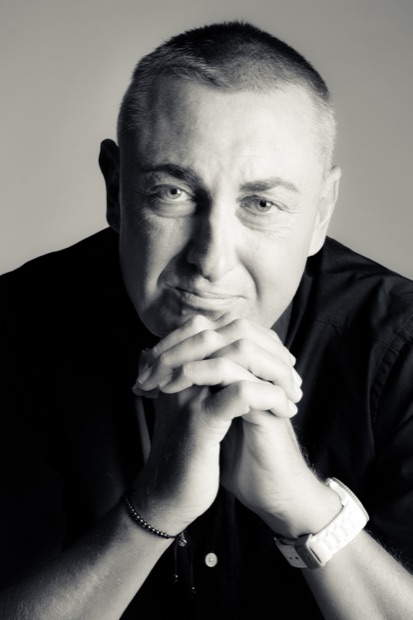
- 📍 Avenue Louise 231, 1050 Bruxelles
- 📞 +32 (0)2 643 11 00
- ✉️ cboeraeve@law-right.com
- 🌐 law-right.com
General information document, without individualised advice. For the analysis of your situation, contact the firm.